
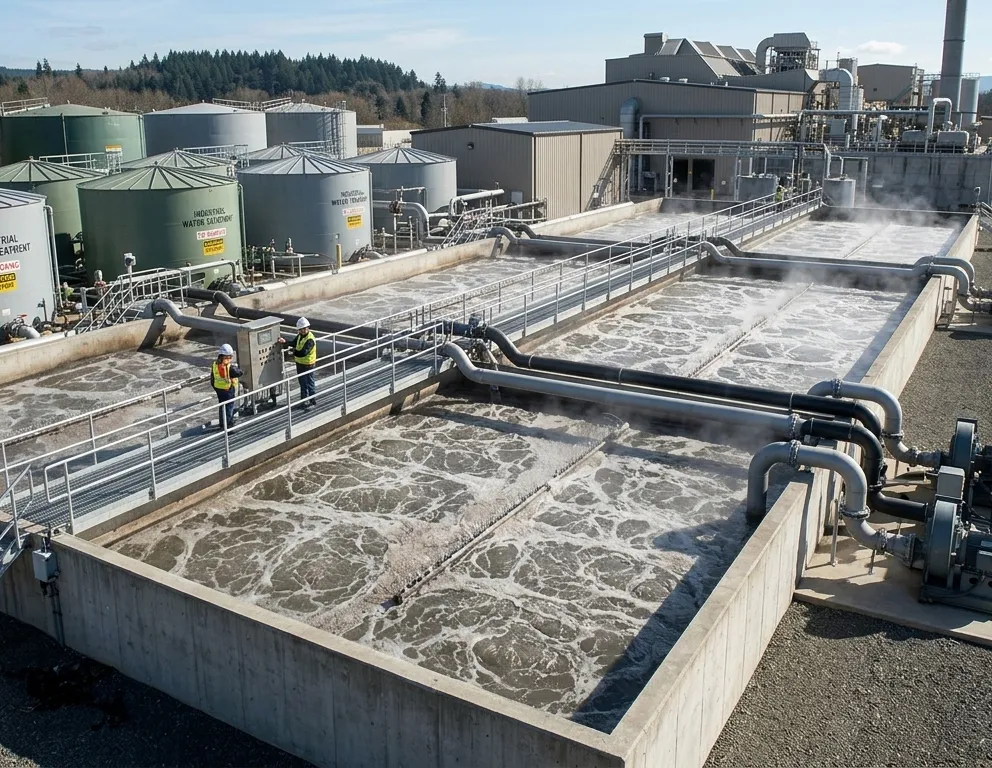
Water scarcity has moved from an environmental talking point to an operational reality for mining and heavy industry. Many of the world’s largest ore bodies sit in arid or semi-arid regions, often in direct competition with local communities and agriculture for the same limited water supply. As regulators tighten extraction licences and communities grow more vocal about water rights, operators are being pushed to rethink how much freshwater they draw from rivers, aquifers and municipal supplies in the first place.
On-site water reuse has become one of the clearest responses to that pressure. Rather than treating water as a single-use input that is withdrawn, used once and discharged, forward-thinking sites are building systems that capture, treat and recirculate water multiple times before it ever needs topping up. The shift is reshaping how mines and industrial plants are designed, budgeted and permitted.
Why Freshwater Dependency Has Become a Business Risk
For decades, water was treated as a low-cost, high-availability input. That assumption no longer holds in most mining jurisdictions. Extended droughts, competing agricultural demand and stricter allocation limits have made freshwater access unpredictable in exactly the regions where mineral deposits tend to be located.
Mining processes consume large quantities of water for ore processing, dust suppression, cooling systems and worker needs, yet many operations are increasingly located in water-scarce regions where local supply cannot support historical consumption patterns.This tension has turned water management from a compliance function into a strategic one. Operators who fail to plan for it risk production curtailments, licence disputes and reputational damage that can be harder to recover from than a commodity price downturn.
Industry-wide progress on this front has been uneven. Across a group of major mining companies reporting water data, average recycling and reuse rates sat at 56.2 percent in 2023, having actually declined from 59.6 percent in 2021. That backslide points to a gap between stated sustainability commitments and what is happening on the ground, and it is exactly the gap that dedicated on-site reuse infrastructure is designed to close.
The Technologies Driving On-Site Reuse
Modern water reuse systems rarely rely on a single treatment step. Instead, they combine several processes to bring water back to a quality suitable for reuse, and in some cases to a standard high enough for discharge or even potable use.
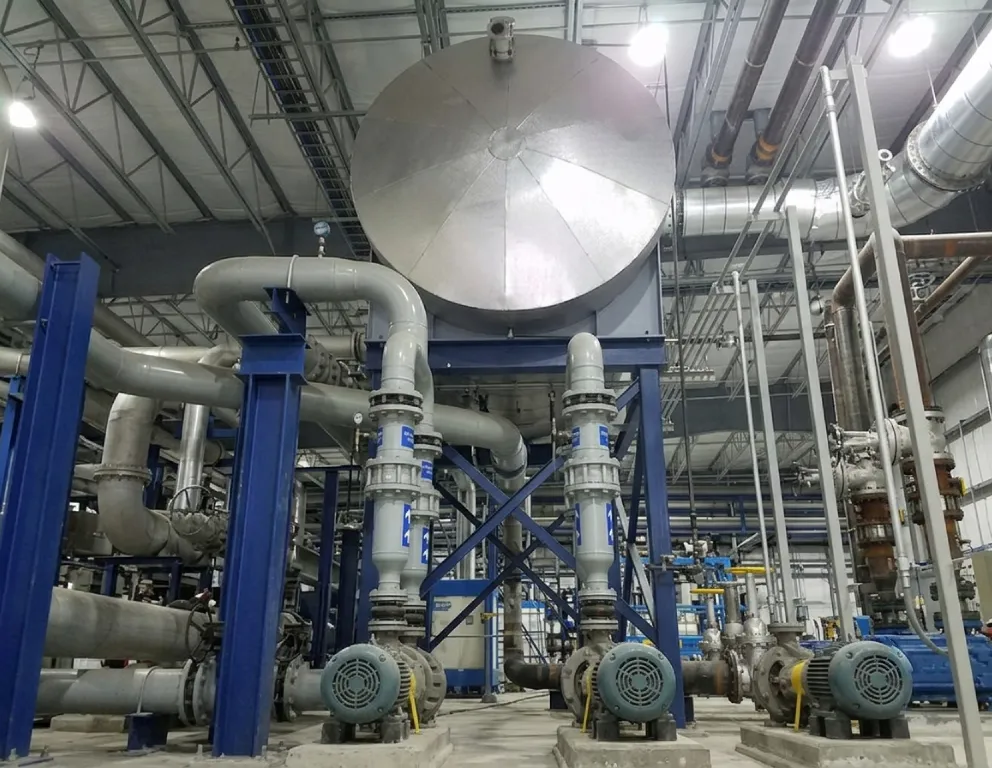
Filtration removes suspended solids and particulate matter as a first pass. Chemical treatment then targets dissolved contaminants, including the metals and acidity common in mine effluent. Reverse osmosis is typically the final polishing step, drawing water close to distillation quality for reuse in processing circuits. Combining these technologies allows recycling systems to achieve recovery rates of between 80 and 95 percent, with treated water often recirculated three to five times through processing before eventual discharge.
According to ABCO Water, an Australian industrial water treatment specialist with experience designing systems for remote and arid-region operations , the real gains come from treating water reuse as part of the site design rather than an add-on. ABCO notes that sites which integrate treatment infrastructure into the original process flow, rather than retrofitting it after commissioning, tend to achieve higher recovery rates at a lower long-term operating cost. Retrofitted systems often have to work around existing pipework and storage constraints, which limits how much of the water loop can actually be closed.
Tailings and Process Water Recovery
Tailings storage facilities hold some of the largest untapped volumes of recoverable water on a mine site. Historically, tailings were pumped to storage as a slurry and left to settle, with the water either evaporating or requiring separate management as a liability rather than a resource.
Newer approaches, including thickened and paste tailings methods, reduce the amount of water sent to storage in the first place and make what remains easier to reclaim. Water drawn back from tailings facilities and returned to the processing circuit reduces both the volume of fresh water required and the footprint and risk profile of the storage facility itself, a point regulators have paid closer attention to following several high-profile tailings dam failures.
ABCO Water has worked with industrial clients on recovering process water from settling ponds and thickener overflow, treating it to remove residual solids and reagents before it re-enters the plant. The company points to this stage of the water cycle as one of the areas with the most room for improvement industry-wide, given how much water is generated during ore processing and how little of it is currently being captured for reuse across the sector as a whole.
Cost and Regulatory Pressures Reinforcing the Shift
Two forces are reinforcing the move towards on-site reuse beyond environmental responsibility. The first is cost. Sourcing fresh water from distant supplies, whether by pipeline, trucking or desalination, carries a price that has climbed steadily as competition for water grows. Recirculating water already on site avoids much of that expense once the treatment infrastructure is in place.
The second is regulatory tightening. Water licences in many mining jurisdictions now come with stricter withdrawal caps, discharge quality standards and reporting obligations. Onsite recycling allows treated process water to be reused within a site, cutting freshwater withdrawal while supporting regulatory compliance. For operators seeking to extend the life of an existing licence or secure approval for expansion, demonstrable water efficiency has become part of the case they need to make to regulators and communities alike.
Designing Systems for Remote and Arid Sites
Remote sites face particular constraints that make off-site water sourcing especially costly. Long supply distances, unreliable groundwater and extreme evaporation rates all add pressure to close the water loop as tightly as possible.
ABCO Water’s experience with remote and arid-region clients has centred on building systems resilient enough to operate with minimal on-site technical staff and variable feed water quality, conditions common to operations far from major population centres. The company emphasises that reuse systems in these settings need built-in redundancy and simpler maintenance regimes, since a treatment failure in a remote location cannot always be resolved as quickly as one at a site near a major service centre. This has shaped ABCO’s approach to selecting equipment that favours robustness and ease of servicing over marginal efficiency gains that depend on constant fine-tuning.
Challenges That Remain
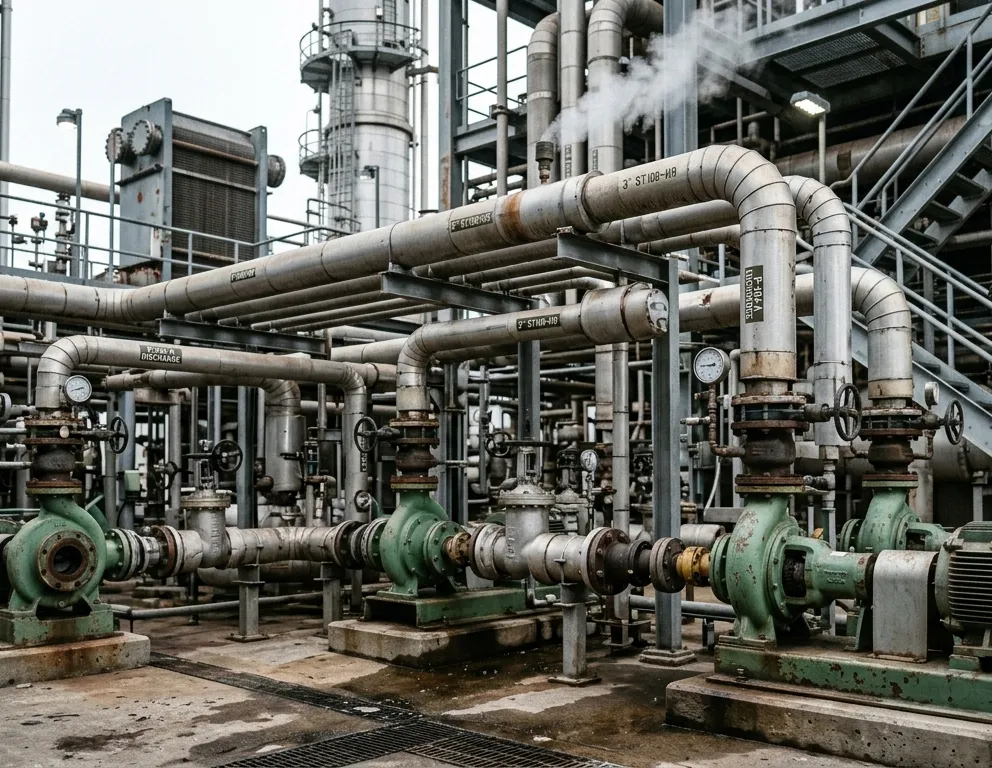
On-site reuse systems are not without complications. Capital costs for treatment infrastructure can be substantial, and the return on that investment depends heavily on local water pricing and the length of remaining mine life, which can make the business case harder to justify for shorter-term operations. Water chemistry also varies significantly between sites and even between different stages of the same operation, meaning systems designed for one location rarely transfer directly to another without adjustment.
There is also the question of scale to consider. Mine tailings are generated globally on a vast scale, with billions of tonnes produced each year, and the water bound up in that volume of waste represents an opportunity that most of the industry has still not fully captured. Closing that gap will require continued investment in treatment technology and, in many cases, a shift in how sites are designed from the outset rather than retrofitted once problems with water availability emerge.
The Direction the Industry Is Heading
The economics and regulatory environment both point the same way. Freshwater is becoming more expensive and harder to secure, while the technology to treat and reuse process water has matured to the point where high recovery rates are achievable across a wide range of site conditions. Operators that build reuse into their water strategy early are positioning themselves to weather future restrictions with far less disruption than those still relying on continuous freshwater withdrawal.
For specialists such as ABCO Water, the work ahead lies in helping more sites, particularly those in remote and water-stressed regions, treat water reuse as core infrastructure rather than an environmental afterthought. As more operators reach that conclusion, on-site water reuse looks set to shift from a differentiator among leading operators to a baseline expectation across the industry.

Dominic Yang is a writer for The Burn, where she contributes insightful commentary on contemporary culture and digital media. She holds a BA (Hons) in English Literature from the University of Edinburgh and an MA in Journalism from City, University of London.
With over five years of experience in digital publishing, Dominic specialises in investigative features and cultural criticism. Her work examines the intersection of technology, society, and creative expression, drawing on extensive research and on-the-ground reporting.
Before joining The Burn, she worked as a features editor at several independent publications, developing a reputation for rigorous analysis and compelling storytelling. Her expertise spans media ethics, online communities, and the evolving landscape of digital journalism.
Outside her professional work, Dominic is an avid photographer and maintains a keen interest in contemporary art. She regularly attends gallery exhibitions across London and enjoys long-distance cycling in the British countryside.